link to company text
The Challenge
Undermind's core technology was powerful but the product experience didn't match. Users struggled to understand what the tool could do, how to get started, and how to navigate between key workflows. The team needed design infrastructure — a way to diagnose problems, prioritize interventions, and ship meaningful improvements fast.
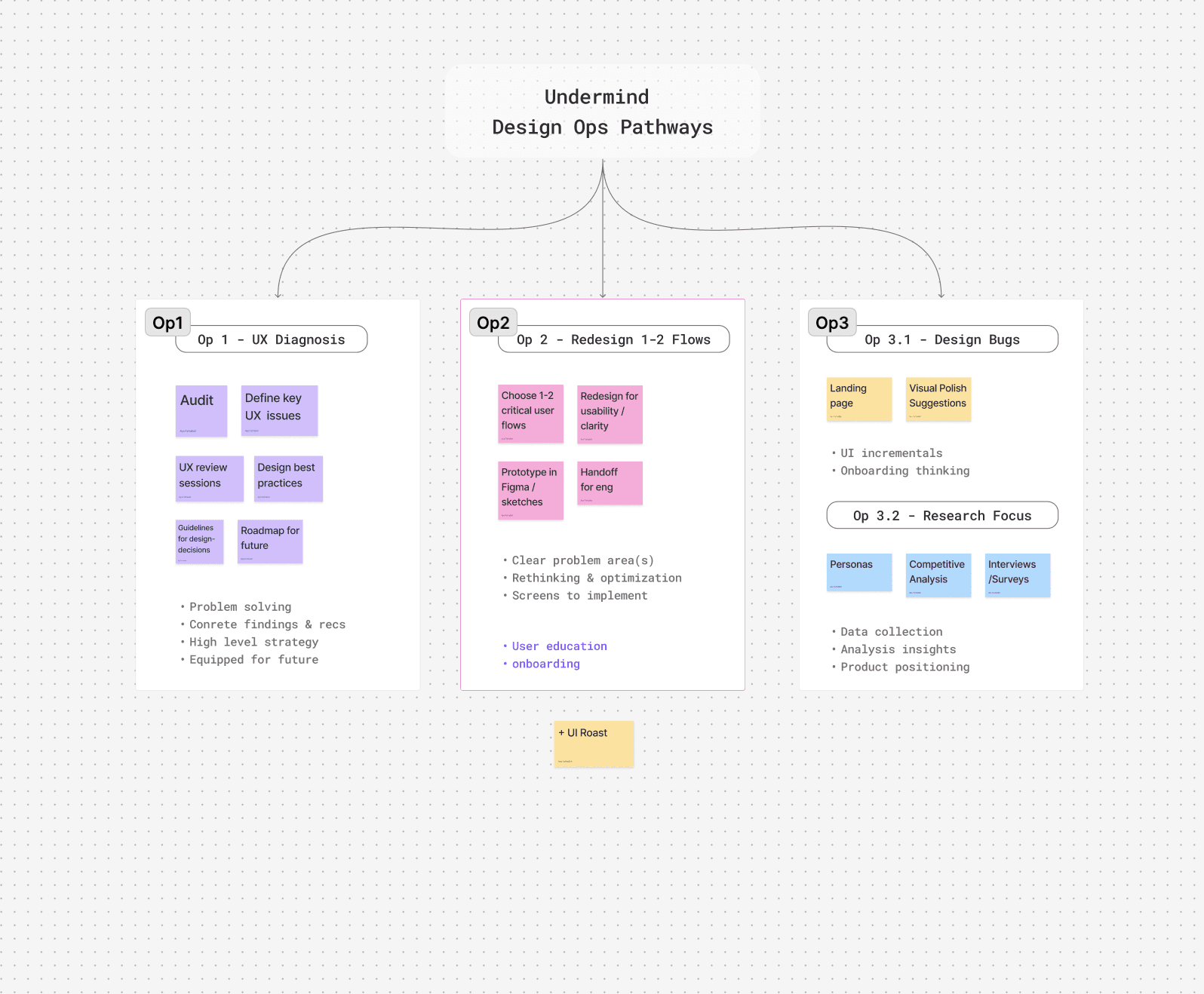
My Approach: Design Opportunity Pathways
Rather than jumping straight into screens, I first established a strategic framework: three parallel tracks that could run independently or together depending on team bandwidth and priority.
UX Diagnosis: A full audit of the product to surface friction points, map user flows, and build a shared vocabulary for design decisions going forward.
Redesign Flows: High-impact redesigns focused on usability, clarity, and engineering handoff — prioritizing user education and onboarding.
Design Bugs + Research Focus: Tactical UI polish, landing page refinement, and deeper research through personas, competitive analysis, and interviews.
This structured approach gave the team a clear menu of design investments with defined outputs at each level.
User Research — Personas, Needs & Discovery
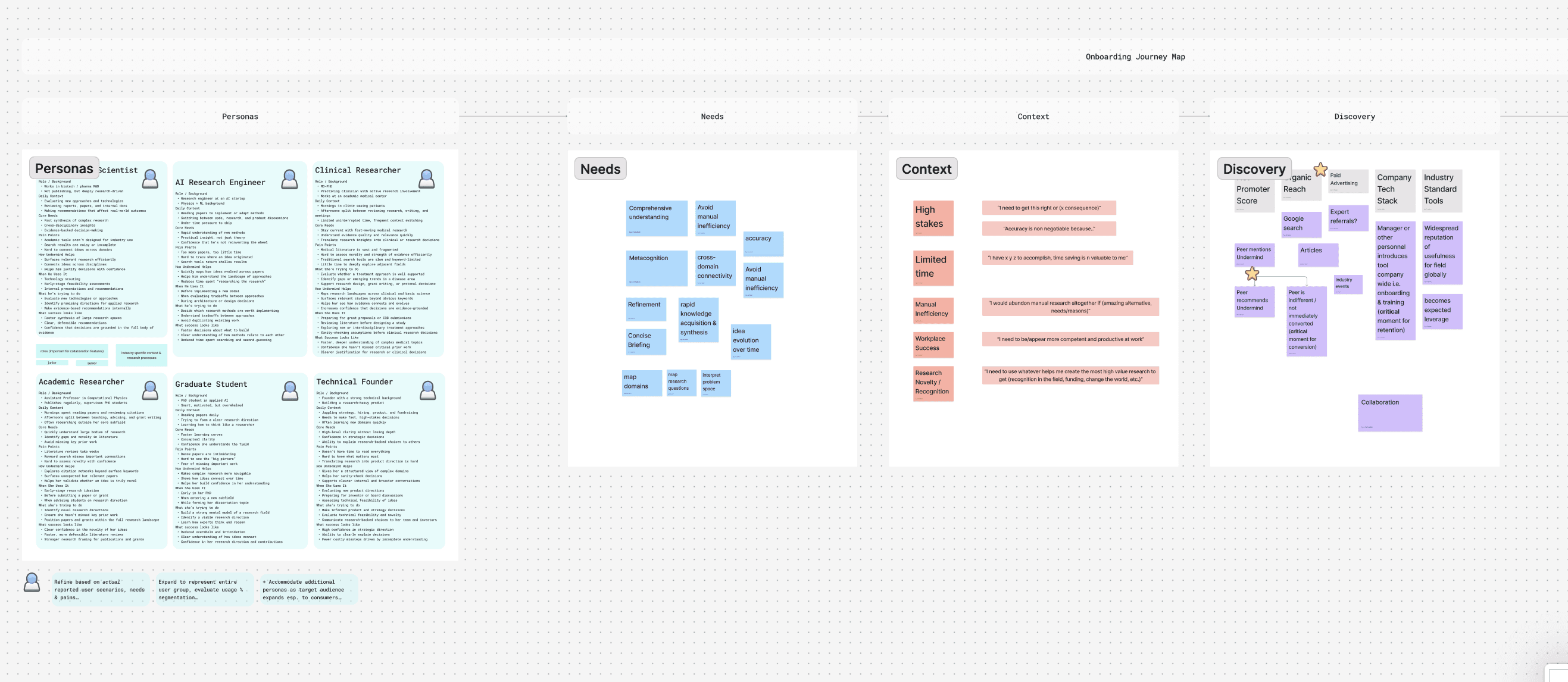
I developed a research foundation anchored in five distinct user personas — Scientist, AI Research Engineer, Clinical Researcher, Academic Researcher, Graduate Student, and Technical Founder — each with distinct daily contexts, pain points, and goals.
From this I mapped:
Needs: Comprehensive understanding, cross-domain synthesis, rapid knowledge acquisition, idea refinement
Context: High stakes, time pressure, manual inefficiency, workplace performance pressure
Discovery channels: Peer recommendations, expert referrals, industry events — with conversion hinging on a critical "aha" moment
This grounded every design decision in real user motivation rather than assumption.
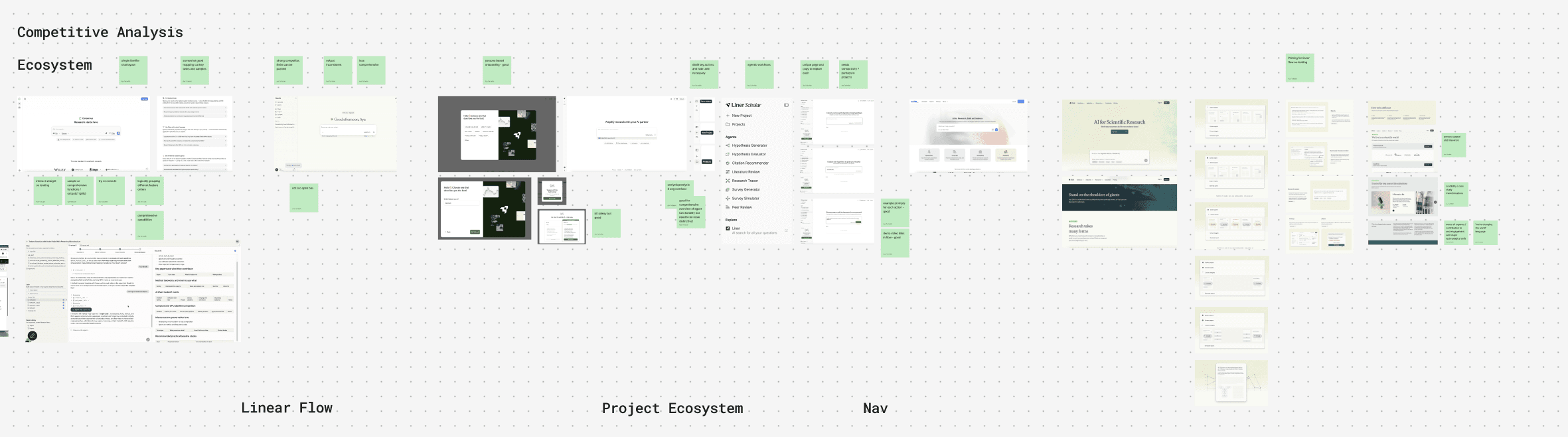
Competitive Analysis
I conducted a competitive analysis spanning the broader AI research ecosystem, focusing on three dimensions: Linear Flow, Project Ecosystem, and Navigation patterns. This surfaced conventions to respect, gaps to exploit, and informed how Undermind could differentiate — particularly in how it structures a user's ongoing research project vs. a one-off query.
Wireframing & Flow Design
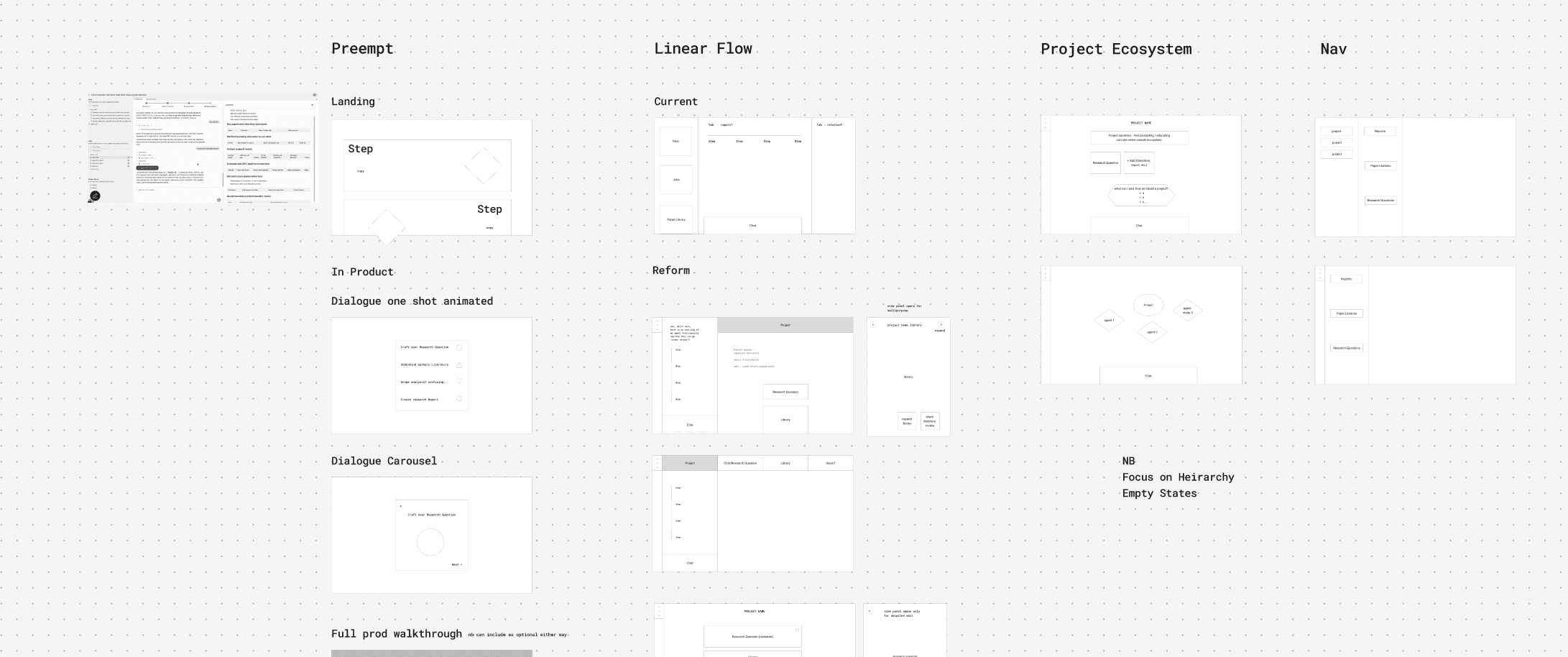
Working across four design dimensions simultaneously — Preempt (landing), Linear Flow, Project Ecosystem, and Nav — I explored a wide solution space before converging. Key explorations included:
Dialogue approaches: One-shot animated vs. carousel onboarding prompts
Linear flow reform: From the current state to a restructured, hierarchy-first layout with clearer empty states
Project Ecosystem: Focused on surfacing hierarchy and empty states to reduce abandonment
Agent Experience Design
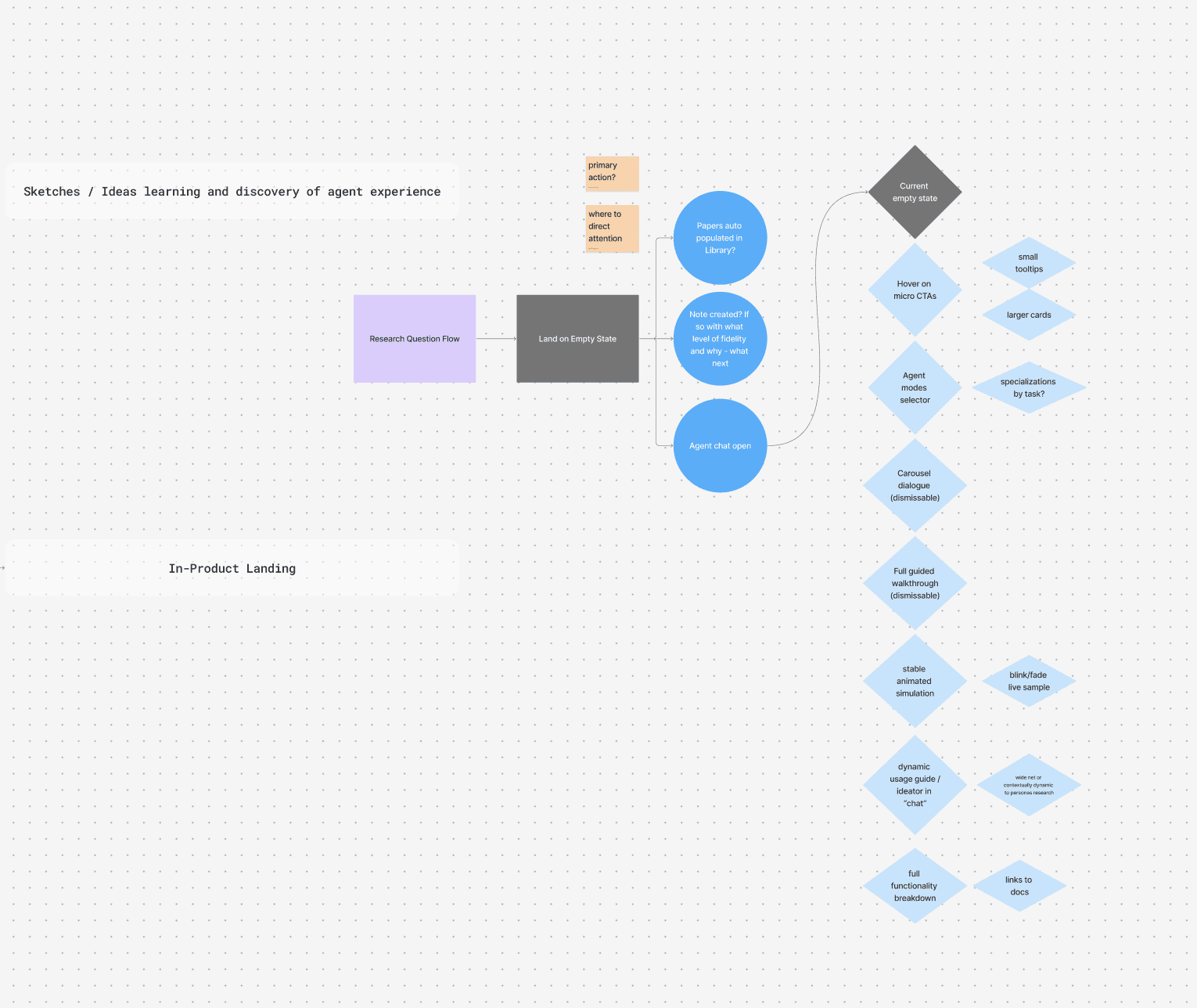
One of the most complex design challenges was communicating how the AI "agent" actually works — and what to do first. I designed multiple concepts for the library-building onboarding state:
Visualizations showing the relationship between Library → AI Expert → outputs (analyze, cite, draft)
Carousel-style contextual education (Examples / Feature Functionality) to reduce cognitive load
An empty state flow mapping: what happens when users land, what triggers notes or paper population, when to open agent chat
This work directly addressed the core learnability problem: users didn't know the tool's full capability or how to activate it.
Landing Page Audit
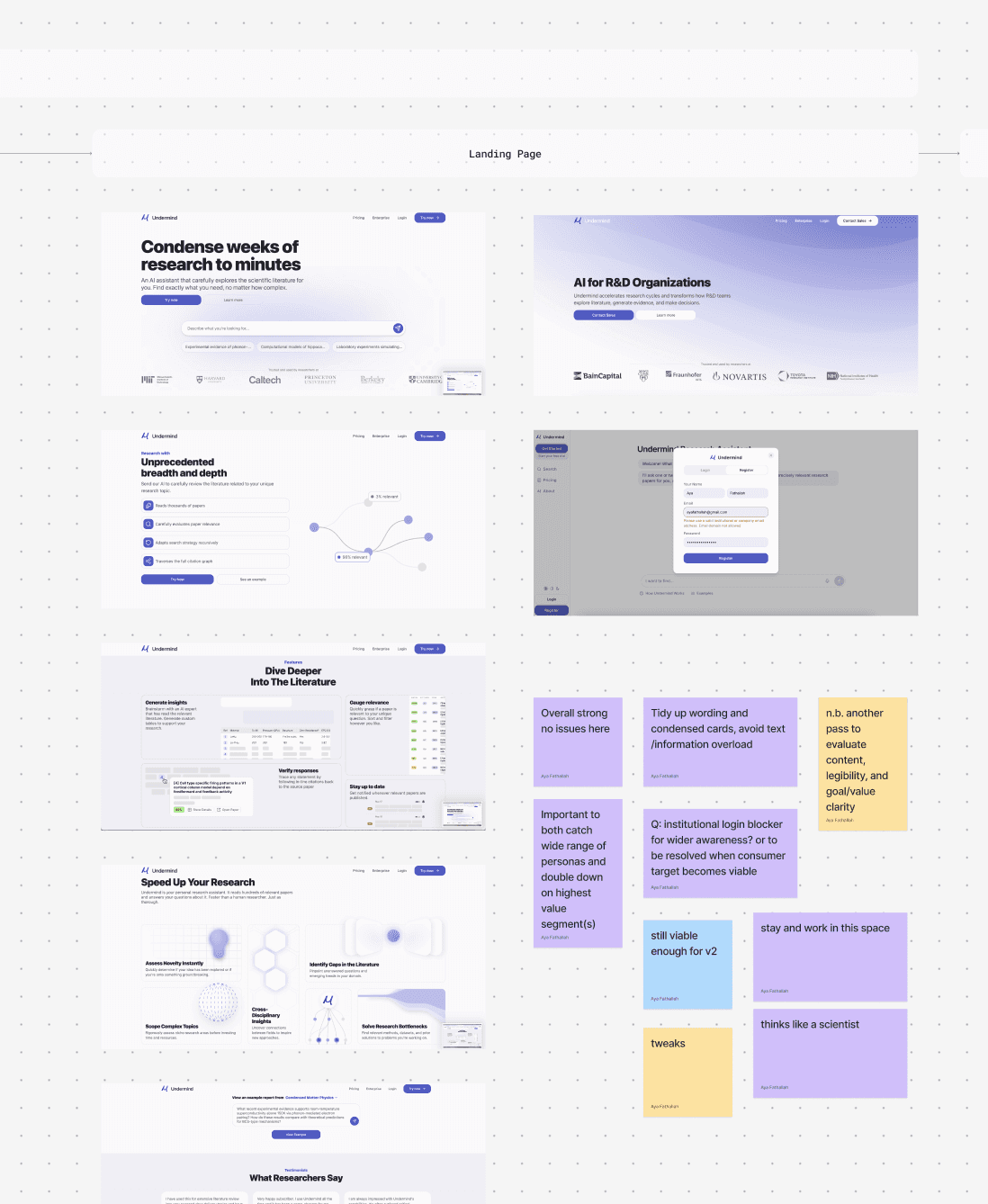
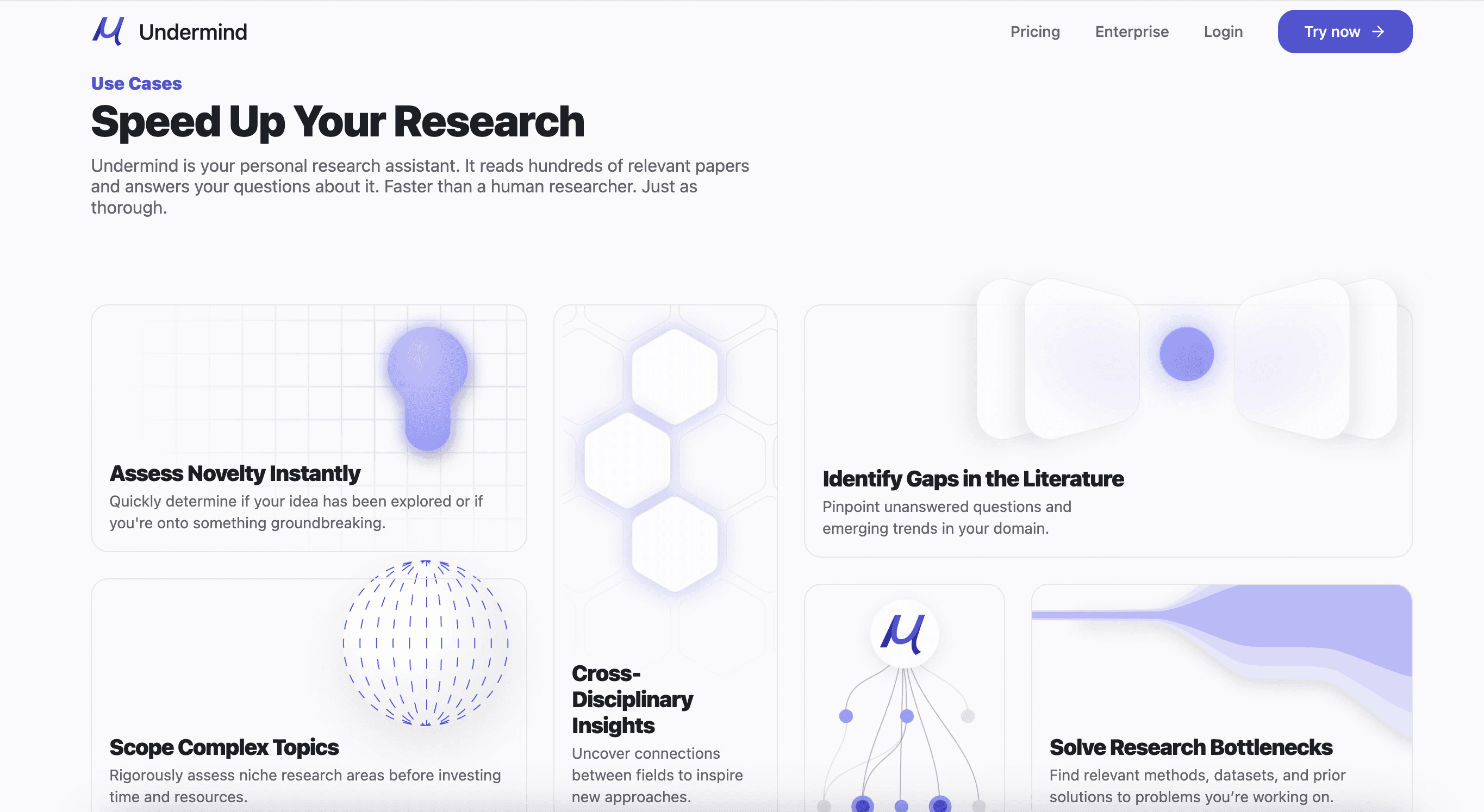
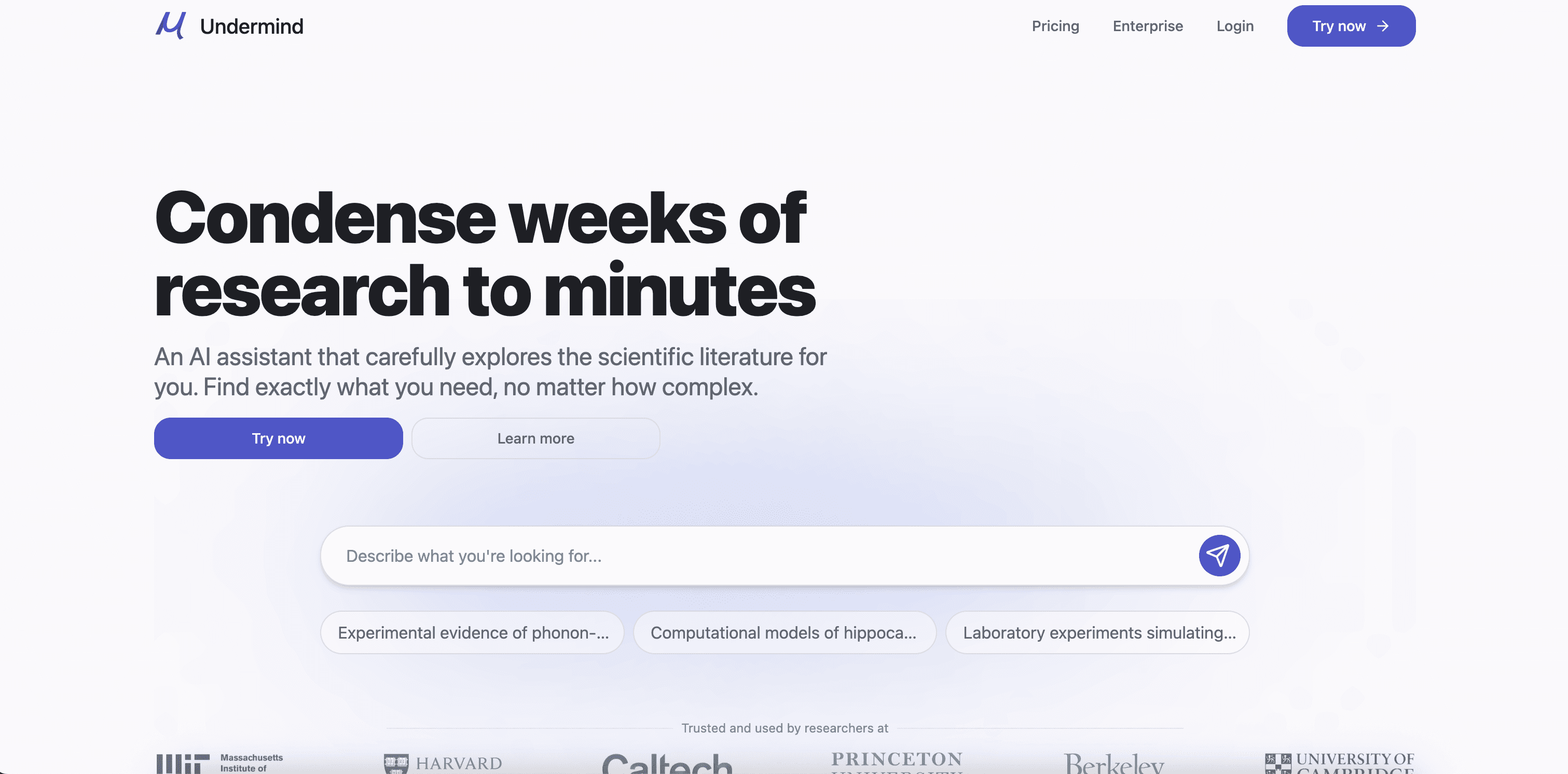
I conducted a structured audit of the existing landing page with annotated recommendations. Key findings:
Strong foundation — messaging and visual design mostly solid, no critical failures
Improvements needed: Tighten copy, reduce card text density, improve legibility and goal/value clarity
Strategic question flagged: Institutional login as a conversion blocker — worth resolving as consumer targeting scales
Positioning strength: "Thinks like a scientist" — a differentiator worth amplifying
Outcomes & Design Principles
Across 10 weeks and three major product pivots, I shipped:
A strategic design ops framework for the team to operate from
Persona + journey map research artifacts
Competitive analysis across the research tool landscape
Wireframe explorations across 4 key product surfaces
Agent onboarding concepts addressing the product's core learnability gap
Landing page audit with actionable, prioritized recommendations
Core principle throughout: Stay grounded in user data. Don't fall in love with a solution — fall in love with the problem.
What I'd Explore Next
Usability testing on the agent onboarding flows
A/B testing landing page copy variants
Deeper persona targeting as the consumer segment matures