link to company text

Overview
As part of Microsoft's Web Experiences Collective (WXC), I owned product design across the Microsoft Advertising Platform, a B2B SaaS tool used by advertisers to manage campaigns, creative assets, and performance at scale. Work spanned integrating AI features, building data visualization systems, running end-to-end user research, and shipping multiple features from 0 to 1, all within Microsoft's Fluent Design System and in close collaboration with PMs, engineers, researchers, and senior leadership.
The Problem Worth Solving
Advertisers were managing creative assets across disconnected workflows — local folders, Google Drive, multiple ad platforms — with no unified place to organize, evaluate, or act on their creative. Performance data existed but wasn't accessible or actionable at the right moments in their workflow. The platform needed to become intelligent, not just functional.
Role: Product Designer Tools: Figma, UserTesting, Microsoft Fluent Design System Team: 4 Partners · 2 GPMs · 2 Principal Design Managers · 6 Product Designers (LII–Senior) · 20+ Engineers · 14 PMs · UX Research Lead + Senior Researchers Timeline: Feb 2022 – May 2023 (1 year 4 months)
What I Built and Why It Mattered
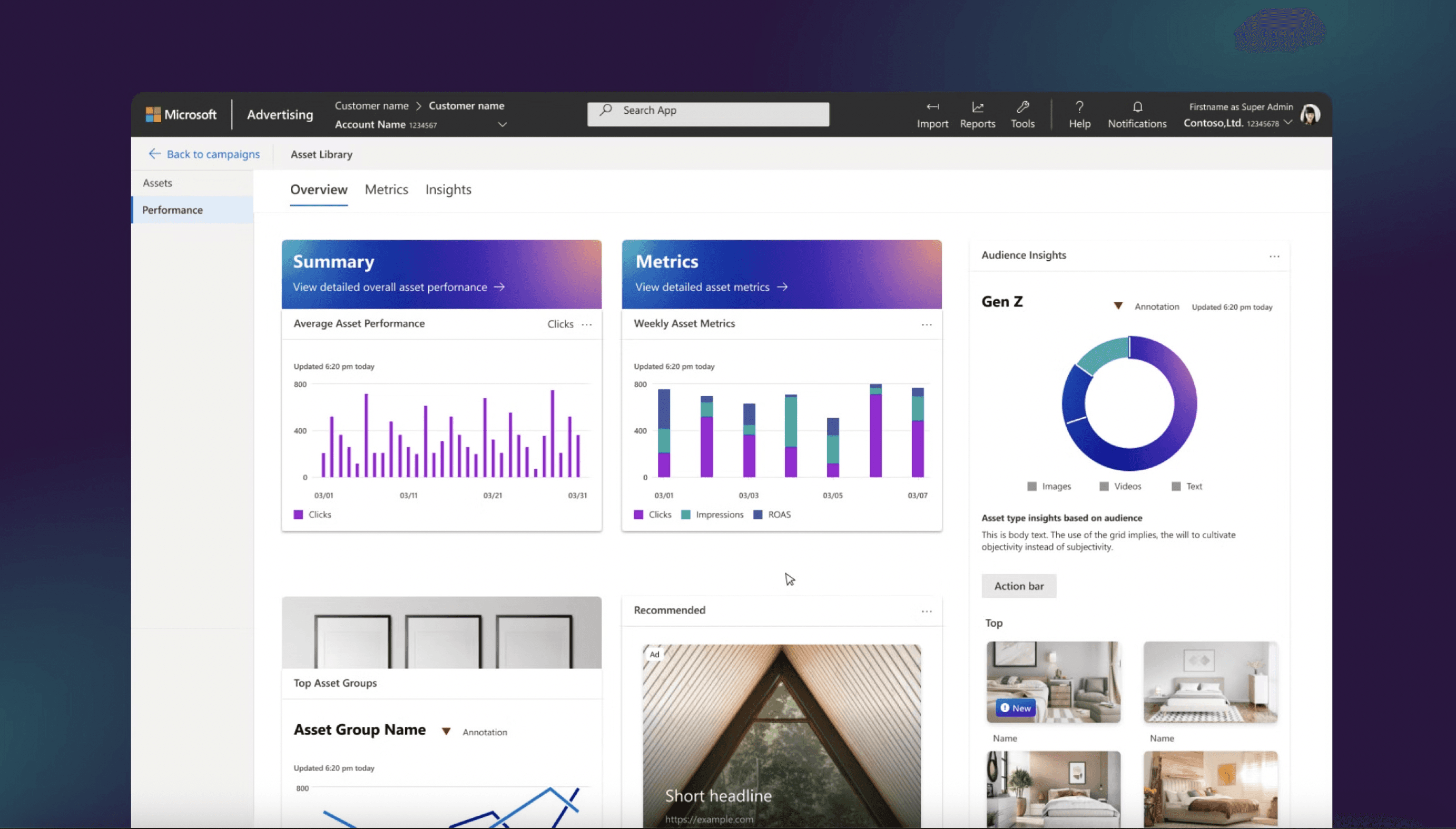
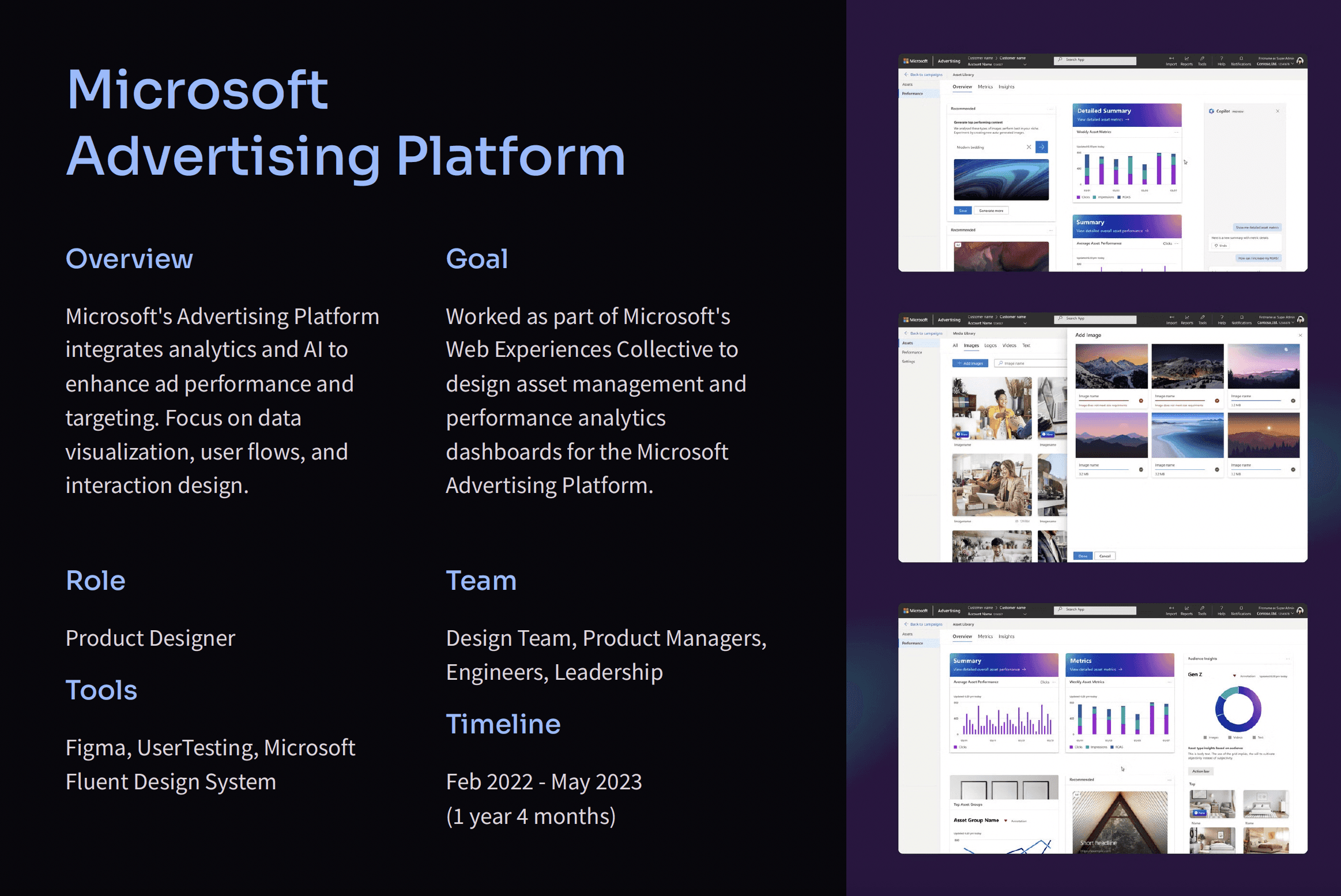
Asset Library I designed the Microsoft Advertising Asset Library — a centralized hub for advertisers to manage, organize, and generate creative assets across campaigns. The core challenge was making a dense, multi-asset environment feel navigable and intelligent. The solution surfaces top-performing assets, cross-links campaign usage, integrates AI creation tools (Copilot, Designer, Smart Effects), and provides recommended actions inline — reducing the friction between insight and action.
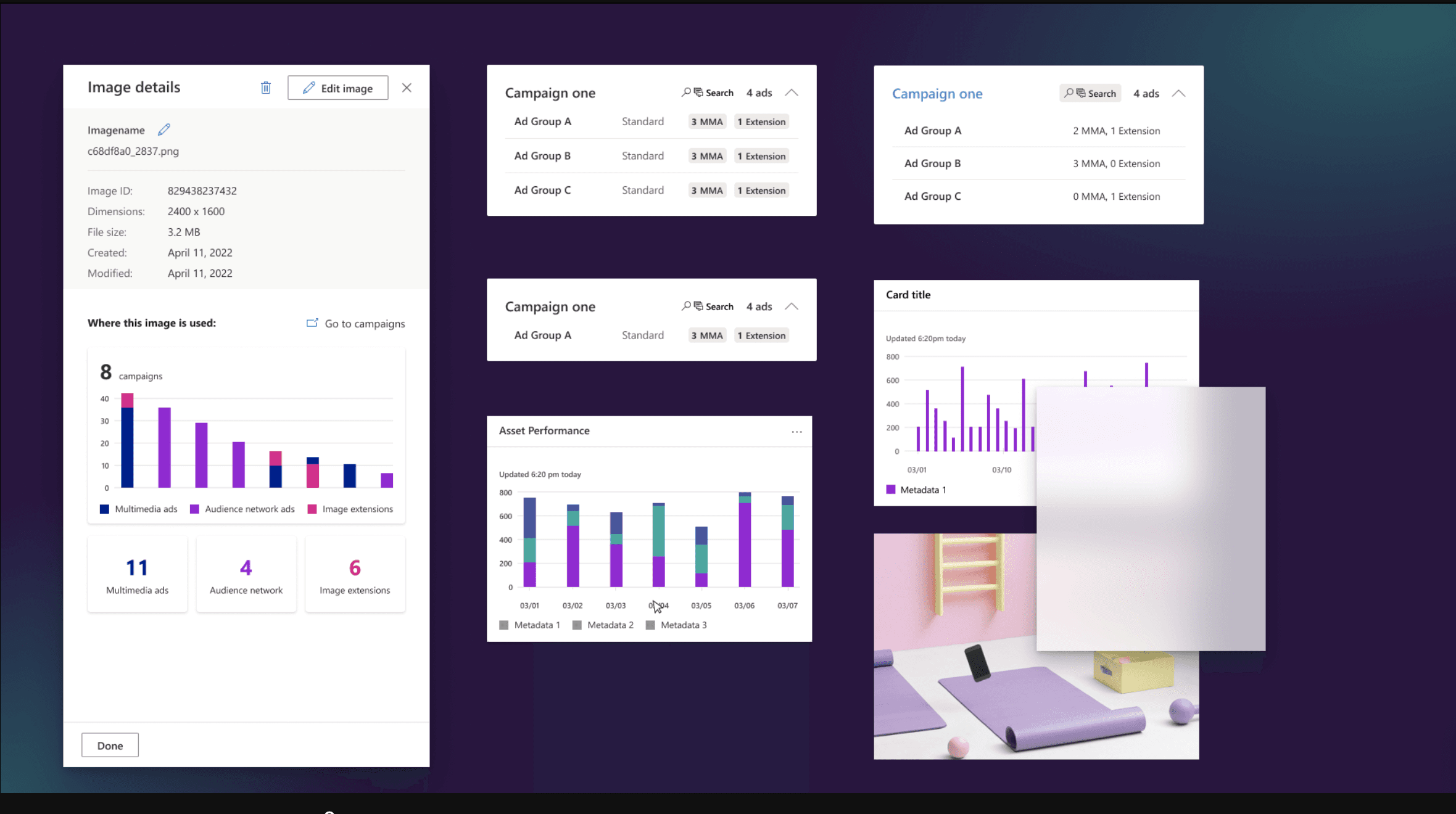
Performance Dashboard & Data Visualization Advertisers needed to understand what was working without drowning in data. I designed the performance analytics experience — including a summary/metrics/insights tab structure, audience-segmented charts (Clicks, Impressions, ROAS), and an asset-level detail panel that surfaces engagement data, campaign reach, and content ratings in one place. The design goal: give advertisers a clear, confident answer to "what's performing and what should I do next?" without requiring them to export or cross-reference.
AI Experiences — Copilot & Designer Integration I led design for integrating Microsoft Copilot and Microsoft Designer directly into the advertising workflow. This included the AI-assisted asset generation flow within the Asset Library and a Copilot chat panel surfacing metric summaries and recommendations in context. The challenge was making AI feel like a natural layer of the platform — not a bolt-on — while respecting advertiser control and trust.
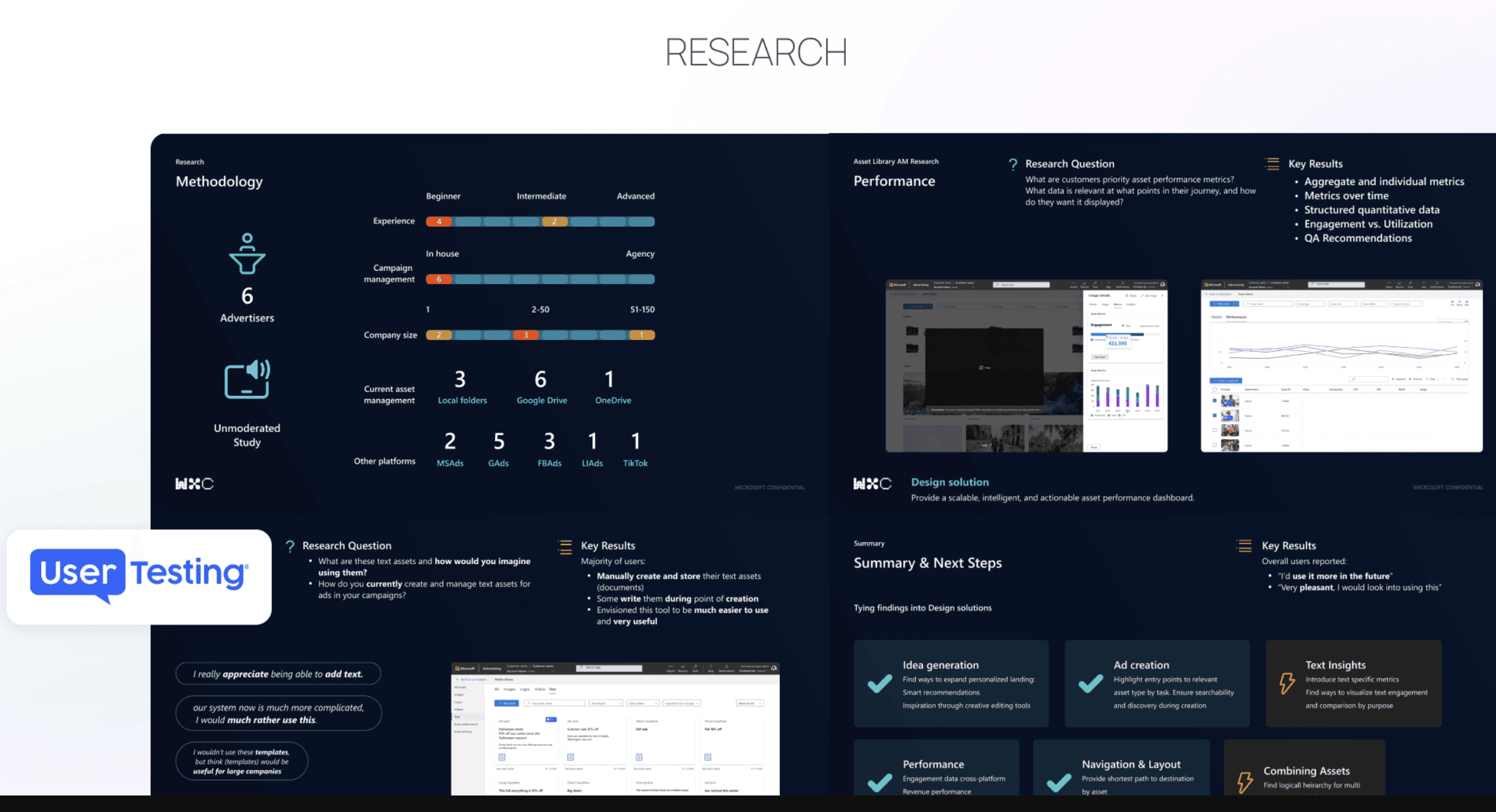
Research That Drove Design Decisions Design decisions were grounded in a rigorous research program. I ran unmoderated studies with 6 advertisers across experience levels, company sizes, and platforms (MSAds, GAds, FBAds, LIAds, TikTok) to understand how they currently manage and measure assets. Key findings shaped the entire product direction: users were manually creating and storing assets, writing text during creation, and envisioning a much smarter tool. From this I defined five design priorities: idea generation, ad creation, performance analytics, navigation/layout, and asset combining — each mapped to concrete design solutions.
What the Research Showed
Users manually created and stored text assets — no central system
Performance data was wanted in context, not in a separate report
Overall sentiment: "I'd use it more in the future" / "Very pleasant, I would look into using this"
Design solution defined as: "A scalable, intelligent, and actionable asset performance dashboard"
Scale of Impact
This work shipped as part of a platform used by enterprise advertisers globally, built alongside a cross-functional team of 50+ stakeholders — requiring strong alignment skills, design systems fluency, and the ability to drive decisions through ambiguity at enterprise pace.